
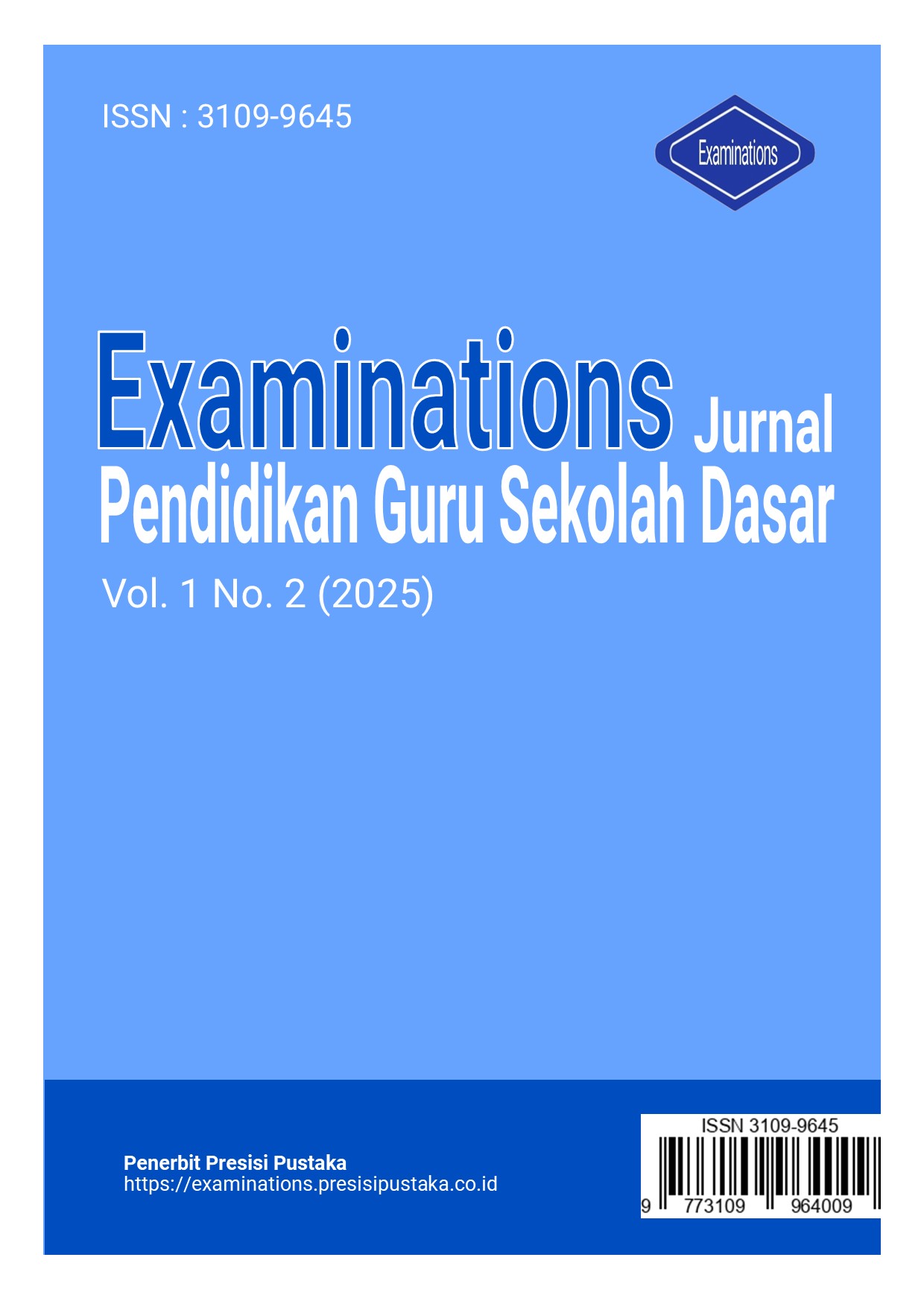
Evaluative Study: Implementation of the Independent Curriculum in Improving the Quality of the Learning Process and Student Learning Outcomes in Elementary Schools
DOI:
https://doi.org/10.65118/exam.v1i2.13Keywords:
Implementation, Independent Curriculum, EducationAbstract
The education system in Indonesia places a larger allocation of teaching than the allocation of education. So that educational activities are more emphasized on the process of improving abilities, skills, and intelligence alone. Meanwhile, the formation of superior, cultured, and quality characteristics has not been fully concentrated in a fundamental way. This situation has resulted in the emergence of various educational problems that are not properly addressed. So it is worrying that it will affect various efforts to improve the quality of education. The causes of the low quality of education in Indonesia in general include the issue of effectiveness, efficiency, and standardization of teaching. The Independent Curriculum is one of the government's initiatives in improving the quality of education by giving schools the freedom to design ideas, models, and learning assessments in accordance with the characteristics of the local environment, culture, and issues around the school environment.
References
Azzahra, I., Nurhasanah, A., & Hermawati, E. (2023). Implementasi kurikulum merdeka pada pembelajaran IPAS di SDN 4 Purwawinangun. Didaktik: Jurnal Ilmiah PGSD STKIP Subang, 9(2), 6230-6238.
Creswell, J. (2015). Educational Research, Planing, Conducting, and Evaluating Qualitative and Quantitative (5th ed.). Pearson Education.
Fatimatuzzahrah, F., Sakinah, L., & Alyasari, S. A. (2024). Problematika implementasi Kurikulum Merdeka di sekolah: Tantangan membangun kualitas pendidikan. Jurnal Bintang Pendidikan Indonesia, 2(1), 43-53.
Ledia, S. L., & Bustam, B. M. R. (2024). Implementasi kurikulum merdeka dalam meningkatkan mutu pendidikan. Reslaj: Religion Education Social Laa Roiba Journal, 6(1), 790-816.
Mardiana, M., & Emmiyati, E. (2024). Implementasi kurikulum merdeka dalam pembelajaran: Evaluasi dan pembaruan. Jurnal Review Pendidikan Dasar: Jurnal Kajian Pendidikan Dan Hasil Penelitian, 10(2), 121-127.
Mulyasa, H. E. (2023). Implementasi kurikulum merdeka. Bumi Aksara.
Mutaqin, M. F. T. (2020). Eksplorasi Kesejahteraan Subjektif Warga Belajar Pendidikan Kesetaraan di Lembaga Pemasyarakatan. Universitas Pendidikan Indonesia.
Nurlaely, N. (2020). Integrating Local Wisdom into Curriculum Design: A Case Study in Indonesian Secondary Schools. International Journal of Instruction, 13(2), 1193-1206.
Purani, N. K. C., & Putra, I. K. D. A. S. (2022). Analisis kesiapan guru dalam penerapan kurikulum merdeka belajar di SDN 2 Cempaga. Jurnal Pendidikan Dasar Rare Pustaka, 4(2), 8-12.
Rosmilawati, I. (2018). Jalan Panjang Menuju Sekolah Alternatif: Refleksi Pengalaman Remaja Kurang Beruntung dalam Meraih Pendidikan. Jurnal Eksistensi Pendidikan Luar Sekolah (E-Plus), 2(1). https://doi.org/10.30870/e-plus.v2i1.2952
Rosmilawati, I., Suherman, & Darmawan, D. (2020). The Benefit of Prison Education: Inmate Students ‟ Self Reflection. Advances in Social Science, Education and Humanities Research, 443(ISET 2019), 592–595.
Sudjana, N. (2018). Evaluasi Program Pembelajaran. Bandung: PT Remaja Rosdakarya.
Suherman, H. (2019). Evaluasi Pembelajaran.Bandung: PT Refika Aditama.
Suparlan, P., & Ertikanto, C. (2018). Evaluasi Pembelajaran Pendidikan Jasmani. Jakarta: PT RajaGrafindo Persada.
Zumrotun, E., Widyastuti, E., Sutama, S., Sutopo, A., & Murtiyasa, B. (2024). Peran kurikulum merdeka dalam meningkatkan mutu pendidikan di sekolah dasar. Ideguru: Jurnal Karya Ilmiah Guru, 9(2), 1003-1009.
Downloads
Published
How to Cite
Issue
Section
License
Copyright (c) 2025 Agung Setyawan, Azkia Najwa Rosyadi, Shelvi Eka Nur Anggraeni

This work is licensed under a Creative Commons Attribution 4.0 International License.
Examinations: Jurnal Pendidikan Guru Sekolah Dasar is licensed under a Creative Commons Attribution 4.0 International License. This attribution requires users to credit the author. Users can distribute, remix, adapt, and improve upon the material in any medium or format, even for commercial purposes. Since many Kasyafa: Jurnal Pendidikan Agama Islam authors write for publications that may be sold or used in a commercial format, we must allow them to do so freely




 This work is licensed under a